
Important Note:
The cork materials discussed in this article refer to engineered cork composites developed for high-temperature aerospace applications. These are specialized formulations designed for extreme thermal environments.
A Natural Material in an Extreme Environment
Cork may be best known for its use in flooring, wall coverings, and closures, but it also plays a role in one of the most demanding engineering environments in the world: spaceflight.
In aerospace, engineered cork-based materials are used as part of thermal protection systems (TPS) - materials designed to protect rockets and spacecraft from extreme temperatures. These systems must withstand both the intense heat generated during launch and the cryogenic cold of stored propellants.
NASA has highlighted the use of cork in its Space Launch System (SLS), where cork is applied in areas exposed to higher thermal loads, particularly around the engine section of the rocket.

Photo Credit: (NASA/Aubrey Gemignani): NASA’s Artemis II Space Launch System (SLS) rocket and Orion spacecraft are seen at Launch Complex 39B, Friday, March 27, 2026, at NASA’s Kennedy Space Center in Florida.
Cork in the Artemis Program
Cork continues to be used in modern space missions, including NASA’s Artemis program, which is designed to return humans to the Moon.
On the Artemis I mission, cork-based material was used on the base heat shield of the SLS rocket. This component protects the lower portion of the vehicle from extreme heat generated by multiple rocket engines during ascent.
NASA research on Artemis I has shown that cork performs as an ablative material, meaning it manages heat through controlled charring and material loss under extreme conditions.
Importantly, NASA has indicated that P50 cork is planned to be one of the most widely used ablative TPS materials on SLS for Artemis II through Artemis V, particularly in areas exposed to high thermal environments.
What Does “Ablative” Mean?
An ablative material protects by absorbing and dissipating heat through physical and chemical change.
When exposed to high heat:
- The material undergoes pyrolysis, breaking down at elevated temperatures
- Gases released from the material can help carry heat away
- A protective char layer forms on the surface
- The outer surface gradually erodes or recedes, removing heat from the system
A recent study from the German Aerospace Center (DLR) shows that cork ablators may initially swell before receding, due to internal gas formation and structural changes.
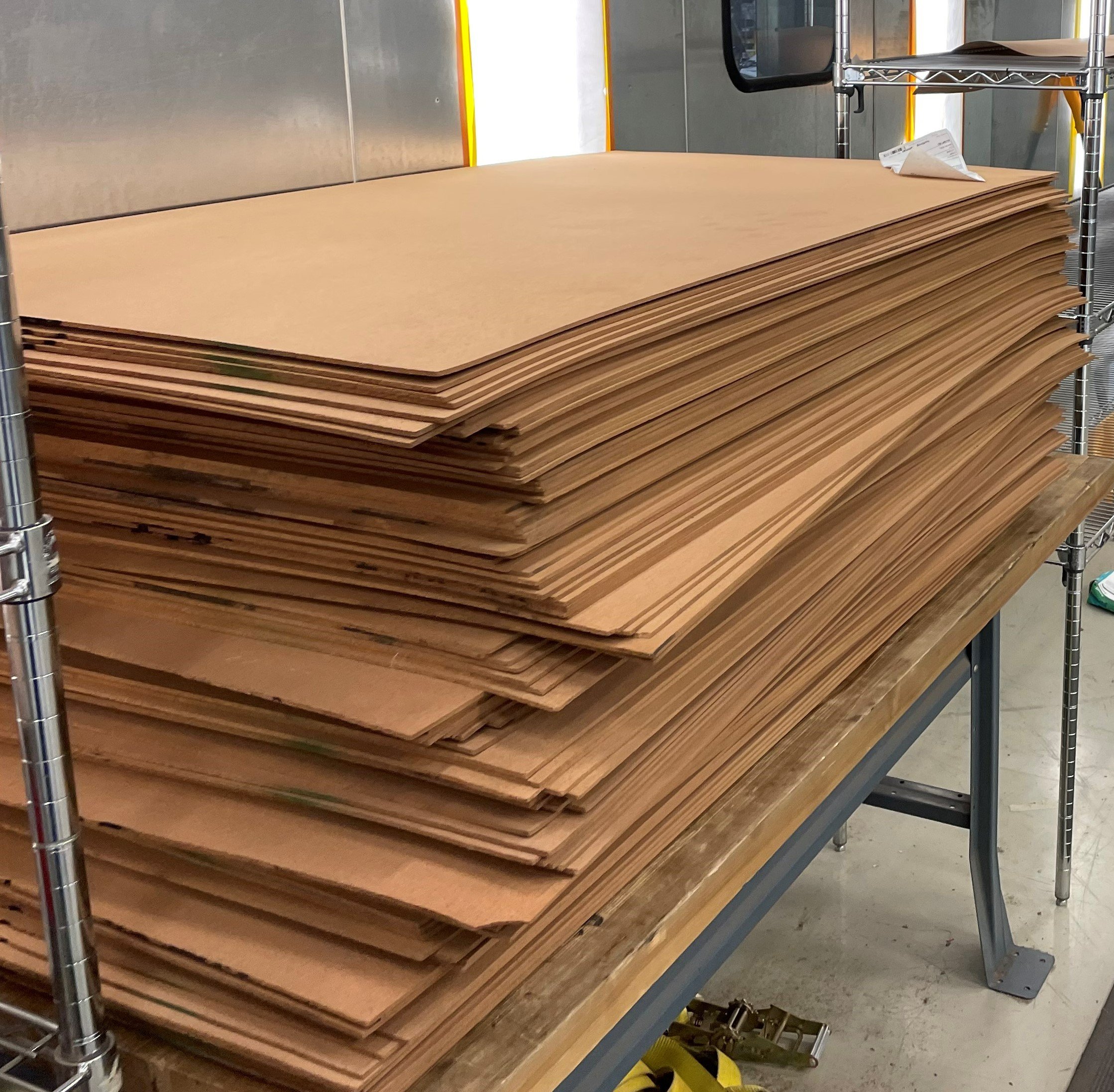
Ablative cork sheets for thermal protection.
Why Cork Works in Thermal Protection Systems
Cork offers a unique combination of properties that make it well-suited for high-temperature applications:
Low thermal conductivity: cork’s cellular structure naturally resists heat transfer.
Lightweight: cork provides insulation without adding significant mass.
Controlled thermal response: cork forms a char layer and gradually erodes, helping regulate heat flow.
Durability under stress: it withstands vibration and thermal cycling.
Sustainability: cork is a renewable material harvested without harming trees.
It’s important to note that cork used in high-temperature aerospace applications is not a standard, off-the-shelf material. These systems use engineered cork composites, designed and formulated specifically for extreme thermal environments.
Beyond Space: Other High-Temperature Applications
While spaceflight is one of the most extreme examples, correctly engineered cork can also be valuable in other high-temperature environments.
Applications include:
- Aerospace insulation systems
- Industrial equipment exposed to elevated temperatures
- Thermal barriers near engines or exhaust systems
- Fire-resistant construction assemblies
Cork in Defense and Missile Applications
Beyond civil spaceflight, cork-based thermal protection materials have also been used in certain missile and defense-related applications where lightweight ablative or insulating protection is needed.
In these environments, cork’s combination of low density, low thermal conductivity, and controlled charring behavior can make it a practical option for shielding structures from intense heat loads.
A Material with a Future
As aerospace and other industries continue to seek materials that are lightweight, efficient, and sustainable, cork remains highly relevant.
From modern lunar missions to industrial applications on Earth, cork demonstrates that natural materials can meet the performance demands of advanced engineering.
Jelinek Cork as a Resource
At Jelinek Cork Group, we provide cork materials in a wide range of formats, including sheet and custom solutions suitable for demanding applications.
For organizations exploring cork for insulation, thermal management, or specialized uses, our team can help evaluate material options and support your project needs.