As construction professionals and homeowners search for ways to reduce their environmental impact, one natural material is experiencing a remarkable comeback. Cork insulation, which has been used for centuries in cold storage, is now leading the charge in carbon-negative building practices. As the construction industry accounts for a substantial portion of global carbon emissions, moving toward materials that actively sequester carbon instead of emitting it marks a fundamental shift in how we build.
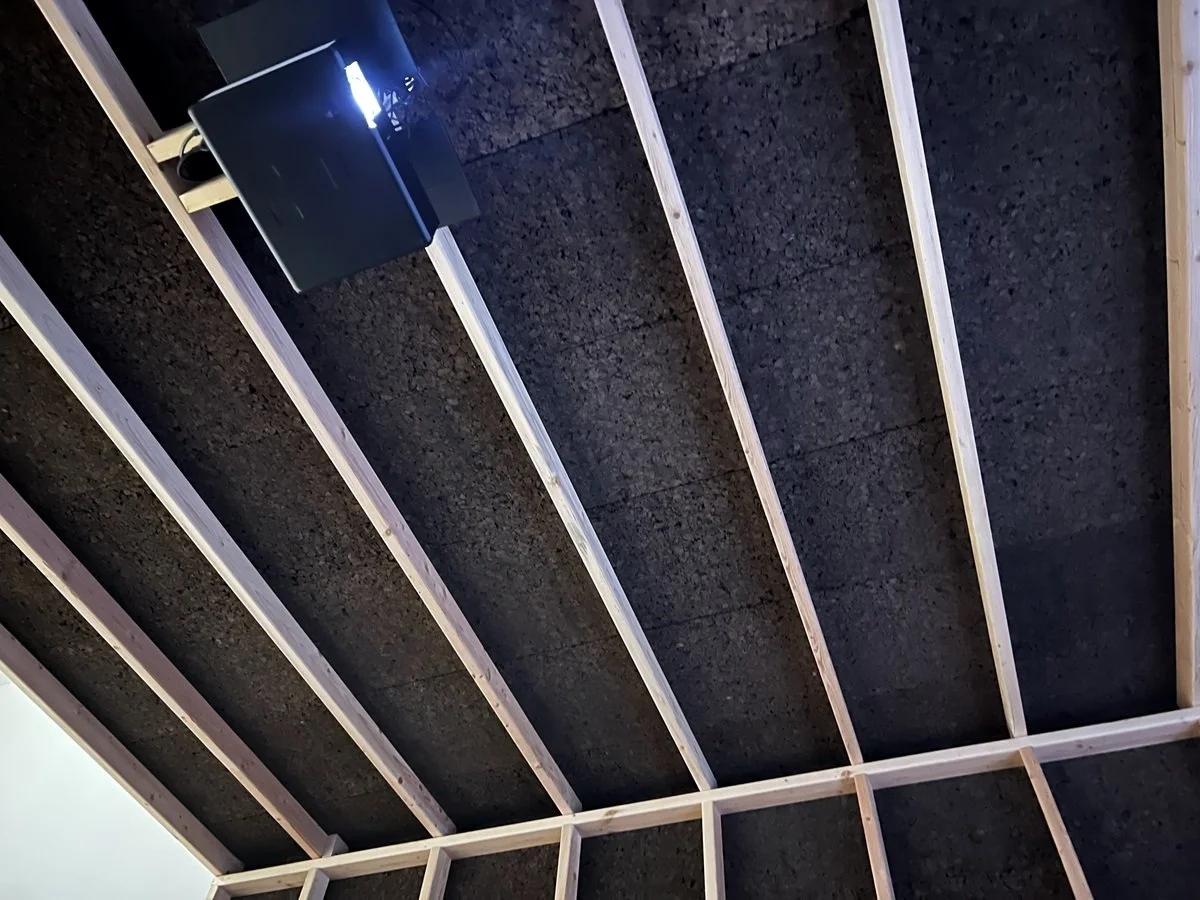
Image: Cork insulation boards installed a ceiling to aid with acoustics - natural, renewable material.
The Science Behind Cork's Carbon-Negative Status
Cork oak trees (Quercus suber), are environmental champions. These remarkable trees can live for over 200 years and harvesting their bark doesn't harm them, it actually encourages growth. A harvested cork oak absorbs 3 to 5 times more CO2 than an unharvested tree, making cork production an active carbon sequestration process.
Throughout its lifecycle, cork bark stores approximately 1.2 kg of CO2 per kilogram of material. When processed into insulation, cork retains this sequestered carbon for decades, maybe even centuries when properly installed. Unlike synthetic insulation materials that require energy-intensive manufacturing and release greenhouse gases, cork insulation manufacturing has minimal environmental impact. Recent industry developments highlight this commitment: Portuguese cork factories are increasingly shifting toward renewable energy and energy-efficient processes, helping lower the carbon footprint of cork production even further.
Performance That Matches Environmental Benefits
Cork insulation isn't just environmentally responsible, it also delivers outstanding technical performance that meets or exceeds conventional insulation materials.
Thermal Performance
Expanded cork insulation boards provide R-values ranging from R-3.6 to R-4.0 per inch, comparable to many conventional insulation materials. The cellular structure of cork, containing millions of tiny air-filled cells, creates natural thermal resistance. Unlike some materials that lose effectiveness over time, cork maintains its insulating properties indefinitely when properly installed.
Acoustic Performance
The same cellular structure that provides thermal insulation also delivers exceptional sound dampening. Cork absorbs sound vibrations rather than transmitting them, making it ideal for both residential and commercial applications where noise control matters. Architects increasingly specify cork insulation for walls between apartments, home theaters, recording studios, and offices.
Durability and Longevity
Cork is naturally resistant to moisture, mold, mildew, and pests. Its antimicrobial properties mean it won't support fungal growth even in humid conditions. Cork doesn't rot, settle, or degrade over time. Buildings insulated with cork in the early 20th century still show the material performing as designed a century later.
Real-World Applications
Cork insulation adapts to virtually any building scenario:
Wall Insulation: Cork boards or panels fit between studs or can be applied as continuous exterior insulation, eliminating thermal bridging.
Roof and Ceiling Insulation: Lightweight cork panels install easily overhead, providing thermal protection without the structural concerns of heavier materials.
Floor Insulation: Cork underlayment beneath finished floors provides thermal insulation, sound dampening, and a comfortable resilient surface that reduces fatigue.
Cavity Insulation: Expanded cork granules can be blown into wall cavities and hard-to-reach spaces, adapting to irregular shapes while maintaining performance.
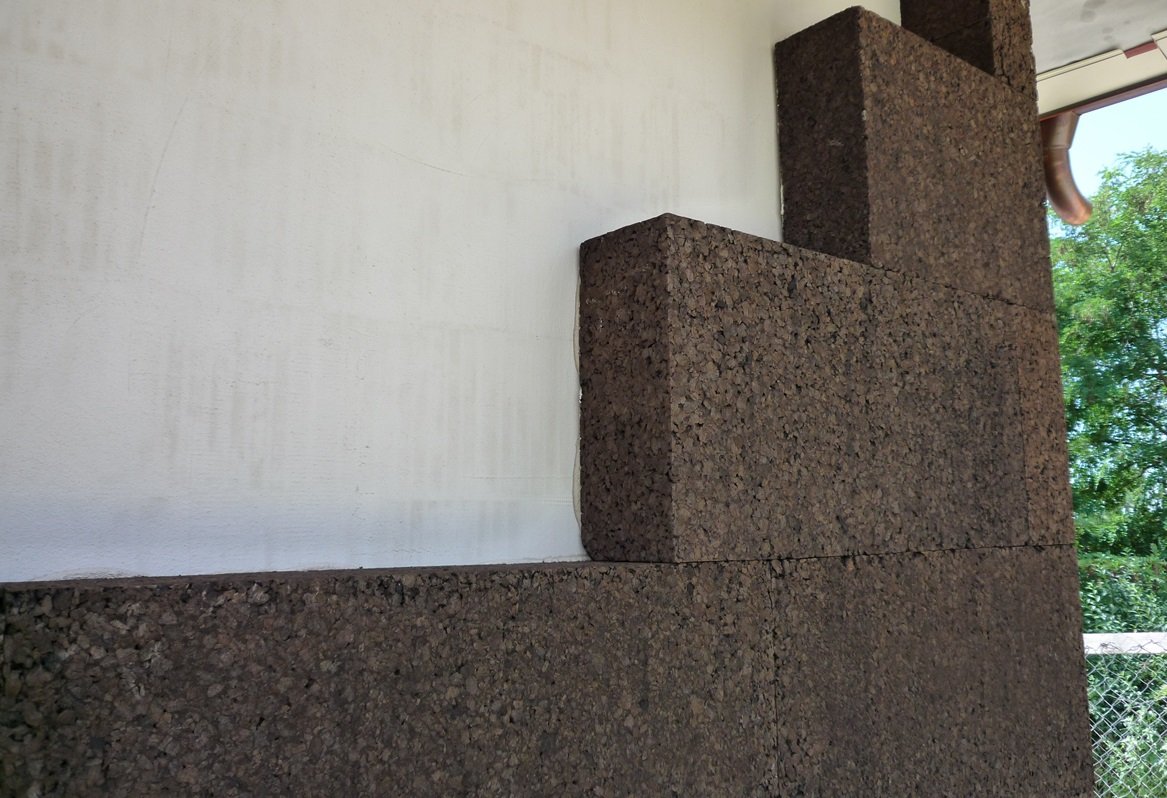
Image: Cork insulation panels installed in sustainable building project.
Jelinek Cork Group: 169 Years of Cork Expertise
Since 1855, Jelinek Cork Group has been one of North America's leading cork specialists. Our commitment to sustainable practices goes beyond products - it's embedded in our company culture and operations. We source our cork from responsibly managed forests primarily located in Portugal and Spain, where cork oak forests support biodiversity and provide livelihoods for rural communities.
Our team works directly with architects, builders, and specifiers to ensure successful cork insulation installations. We understand that choosing sustainable materials represents an investment in long-term performance, and we provide the expertise to maximize that investment.
Making the Switch to Cork Insulation
Transitioning to cork insulation is simpler than many builders expect. Cork insulation is installed using standard tools and techniques. No special protective equipment is required as cork contains no irritating fibers or chemical treatments. Installers consistently report that cork is easier and more pleasant to work with than many conventional alternatives.
The cost premium for cork insulation continues to decrease as demand grows and production scales. When factoring in durability, performance, longevity, and environmental benefits, cork insulation often represents a better value over the building's lifetime than initially cheaper alternatives that may need replacement or fail to deliver consistent performance.
The Future Is Carbon-Negative
As building codes evolve to address climate change, carbon-negative materials like cork insulation will shift from optional sustainable choices to standard practice. Forward-thinking builders and developers are already positioning themselves as leaders in this transition, differentiating their projects in an increasingly environmentally conscious market.
Cork insulation represents more than a building material, it's a practical solution that allows construction professionals to deliver superior performance while actively contributing to carbon sequestration. In an industry often criticized for its environmental impact, cork offers a way forward that doesn't require compromise between performance and sustainability.
Ready to Build Carbon-Negative?
Jelinek Cork Group offers a complete range of cork insulation products designed for every application. Our team is ready to help you specify the right solution for your project and ensure successful installation.
Explore our cork insulation products at jelinek.com and corkstore.com in the U.S., or corkstore.ca in Canada, or contact our team for project-specific guidance.